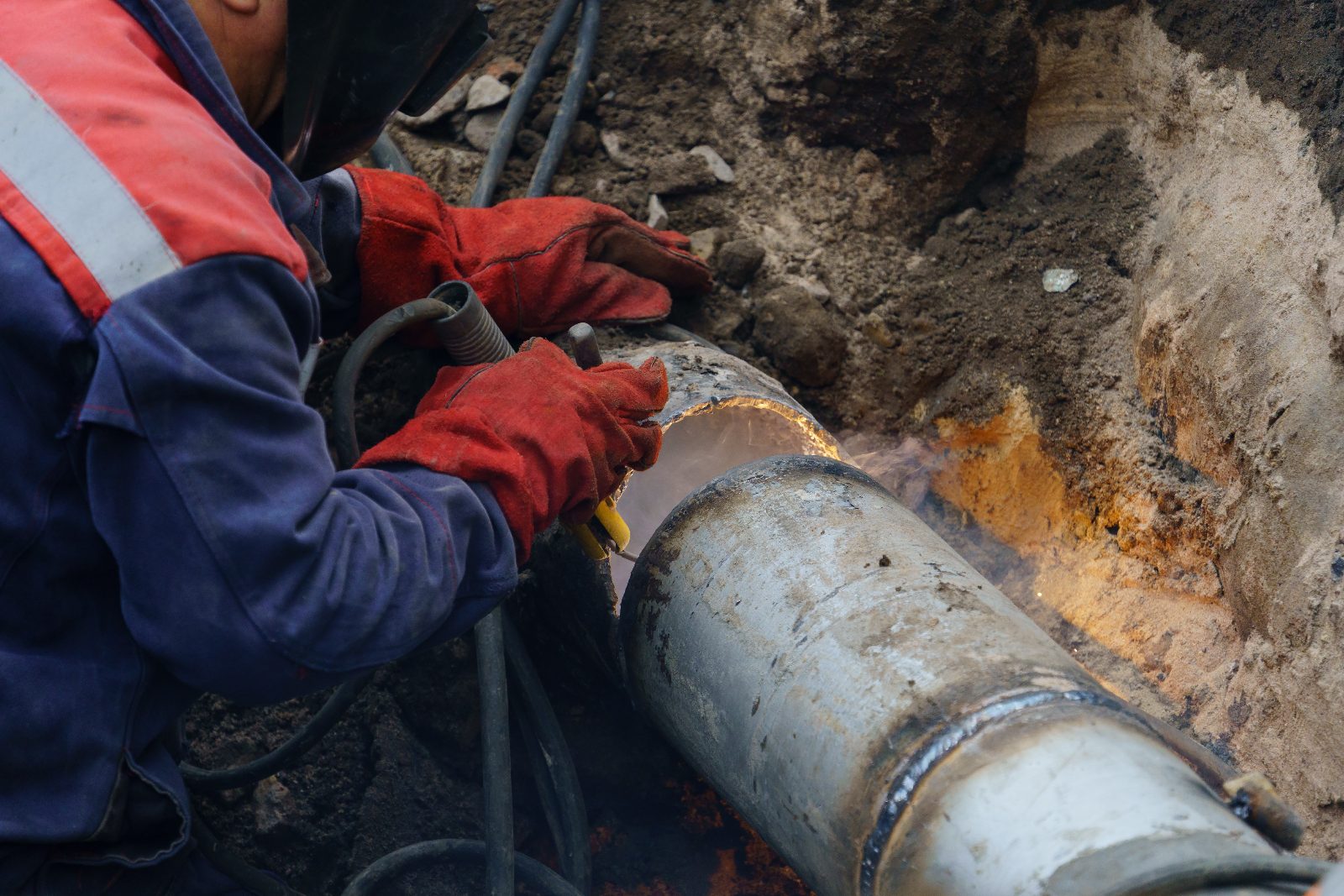
Less Excavation for Eligible Sewer Lines
Trenchless Sewer Line Replacement
Find out whether your sewer line is a candidate. Get a Free Estimate
Less Excavation for Eligible Sewer Lines
Find out whether your sewer line is a candidate. Get a Free Estimate
When an underground sewer line is failing, replacing it does not always mean opening a trench across the entire yard. Trenchless sewer line replacement uses strategically located access points and specialized equipment to install a replacement line while reducing the amount of surface excavation required.
The method is not right for every sewer. Existing pipe condition, severe collapse, alignment, utility conflicts, bends, connection details, access, and local site conditions all matter. We start by evaluating the line and property so the replacement method is selected for practical reasons rather than simply because it is labelled trenchless.
Trenchless replacement is generally considered when the existing sewer has reached the point where repeated cleaning or small repairs no longer address the underlying condition. A camera inspection and site assessment help determine whether the line and property are suitable.
A sewer that repeatedly blocks, develops root intrusion, or requires frequent service may have defects that cleaning alone cannot solve. When deterioration extends along a significant portion of the line, replacement can provide a more complete solution.
Older sewer pipes can develop cracks, separated joints, deformation, corrosion, or other defects. The type and extent of deterioration help determine whether trenchless replacement is practical.
Where a sewer crosses finished landscaping, walkways, driveways, or other surfaces, reducing open excavation can be valuable. Access points are still required, and every site needs to be evaluated individually.
Camera inspection can help show internal defects and possible obstruction points. Additional site information may also be required because a camera view does not reveal every underground condition surrounding the pipe.
The location of the building connection, property-line connection, utilities, structures, and suitable equipment access all affect the replacement plan. We review these conditions before recommending a method.
| Service | Estimated Cost | Average |
|---|---|---|
| Initial sewer assessment | Quoted for the property | Site-specific |
| Trenchless line replacement | Quoted after inspection | Depends on length and conditions |
| Access and connection work | Included or itemized by scope | Site-specific |
Sewer replacement pricing varies significantly with line length, depth, pipe size, access, connection points, surface restoration, utilities, and underground conditions. A property-specific estimate is more useful than a generic price range.
We assess whether trenchless replacement actually fits the sewer and property before recommending it.
We explain expected access points, replacement limits, connections, and factors that could change the work.
When trenchless methods are practical, the goal is to reduce unnecessary surface disturbance while completing the required underground work.
Inspection findings are used to support the replacement decision instead of relying only on recurring symptoms.
Ask whether trenchless replacement fits your Edmonton-area property. [CTA:estimate]
Free — no obligations
We start with the history of backups, cleaning, previous repairs, and other sewer problems at the property.
A camera inspection and site review help identify visible defects, line routing, and important access considerations.
We determine whether trenchless replacement is appropriate or whether another repair approach is better suited to the conditions.
Required access points, connection areas, equipment positioning, and work limits are identified before replacement begins.
The new line is installed according to the selected method, with necessary connection and access work completed as part of the scope.
We review the completed work and any remaining restoration or property considerations with the customer.